We work proudly alongside some of the biggest names from remarkable industries around the world.
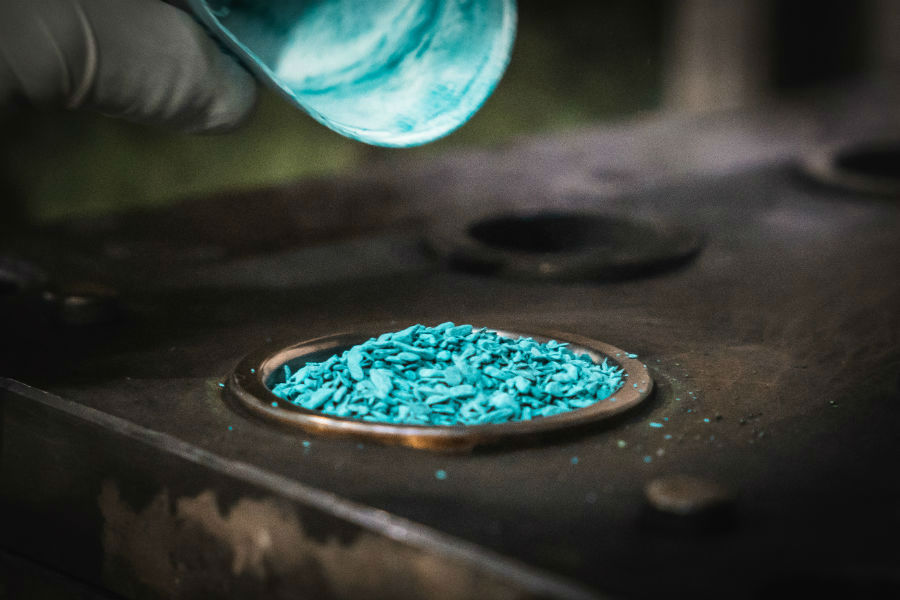
Plastic compression moulding is the manufacturing process by which a measured amount of thermoset plastic material is placed directly into a heated mould cavity and compressed under pressure to form the finished part.
At Fairgrieve Compression Moulding, we specialise in high-quality plastic compression moulding solutions for demanding industrial applications,
The process offers a number of advantages over plastic injection moulding, particularly for manufacturers seeking strong, durable components with lower tooling costs and reduced material waste.
In this article, our team explains the various advantages the compression moulding process offers over injection moulding.
What are the main advantages of plastic compression moulding over injection moulding?
Compared to plastic injection moulding, this process uses lower pressures and simpler tooling while delivering excellent mechanical performance.
One of the main advantages of plastic compression moulding over injection moulding is material efficiency and reduced waste. Injection moulding typically generates excess plastic in the form of runners and sprues, which must be reprocessed or discarded.
Compression moulding uses only the material required for the part, resulting in minimal waste, lower raw material costs and improved sustainability.
This makes compression moulding particularly cost-effective when working with high-performance or reinforced plastics.
What are the tooling costs for compression moulding?
Compression moulding tools are generally simpler and less expensive than injection moulding tools. Without the need for complex runner systems or high-pressure injection units, tooling costs are significantly lower.
This provides clear benefits for new product development, medium-volume production and cost-sensitive manufacturing projects. Shorter tooling lead times also allow faster time to market.
Are compression-moulded plastic components stronger?
As compression moulding applies uniform pressure across the entire mould cavity, this results in superior fibre distribution and reduced internal stress.
Compared to injection moulded parts, compression moulded components often demonstrate higher mechanical strength, improved dimensional stability and enhanced electrical and thermal properties
These characteristics make plastic compression moulding ideal for electrical components, industrial housings, and structural applications.
Which manufacturing approach is best for thick-walled, high-performance parts?
When looking to manufacture thick-walled plastic parts, injection moulding can encounter challenges including sink marks and uneven cooling.
Compression moulding excels in producing thick or solid components, uniform density parts and complex shapes requiring strength and reliability.
This makes the process well-suited for demanding industrial and engineering environments.
Which process uses less energy to offer sustainable manufacturing?
Because plastic compression moulding operates at lower pressures than injection moulding, it typically requires less energy, helping to lower production costs, improve environmental performance and support sustainable manufacturing goals.
For companies looking to reduce their carbon footprint, compression moulding offers a practical and efficient solution.
Why Choose Fairgrieve Compression Moulding?
While plastic injection moulding remains suitable for high-volume, thin-walled products, plastic compression moulding provides clear advantages where strength, durability, tooling cost, and material performance are critical.
Compression moulded plastic components often achieve an excellent surface finish directly from the mould. This reduces or eliminates the need for secondary finishing processes, saving both time and cost while ensuring consistent quality across production runs.
At Fairgrieve Compression Moulding our team has decades of experience with advanced compression moulding techniques and is able to deliver reliable, high-quality plastic components tailored to customer requirements, offering a cost-effective and high-performance alternative to injection moulding.
We would love to hear from you to discuss your needs. Give us a call or fill out our enquiry form and we'll get back to you as soon as possible.
15 Sedling Road, Wear Industrial Estate, Washington, Tyne & Wear, NE38 9BZ